Yardie
Private marketplace for friend groups
Yardie is a friends-only marketplace for selling and giving away items within your own circle — no strangers, no public feed, no spam. It started from a familiar friction: when a friend group wants to pass things along, everything ends up dumped in a group chat, where photos get buried, items get missed, and nobody can keep track of who wanted what.
I designed and built Yardie end-to-end as a solo project — from problem framing and IA through final UI, and into a working React Native build using AI-assisted development tools. It's both a product I'd actually use and a way to demonstrate full-stack product thinking: not just designing the experience, but shipping it.
Project at a Glance
-
Solo designer & builder
End-to-end product design & Front-end development using AI
-
Installable mobile web app (PWA), built in React Native + Expo
-
Figma, React Native, Expo, Supabase, Cloudflare Pages, AI-assisted development
-
2026
The Problem
Public marketplaces like Facebook Marketplace, OfferUp, and Depop are built for stranger transactions — they optimize for reach, anonymity, and buyer-seller protection against people you'll never meet. That trust model is exactly wrong for trading with people you already know. It feels impersonal, a little transactional, and slightly unsafe to broadcast your stuff to the public when all you wanted was to offer it to your friends first.
But the alternative, the group chat, has no structure. Items scroll away. There's no clear way to call dibs, no way to see what's still available, and no graceful way to handle two friends wanting the same thing.
The insight that drove the design: existing platforms solve discovery for strangers. Friends need a fundamentally different trust model — one where the circle is closed by default and the social etiquette of sharing is designed into the product.
The Solution
A small, intimate, invite-only marketplace scoped entirely to your own people.
Friend-code access, no public browsing. You only see your circle's items, and they only see yours. Trust is the default, not something you have to verify transaction by transaction.
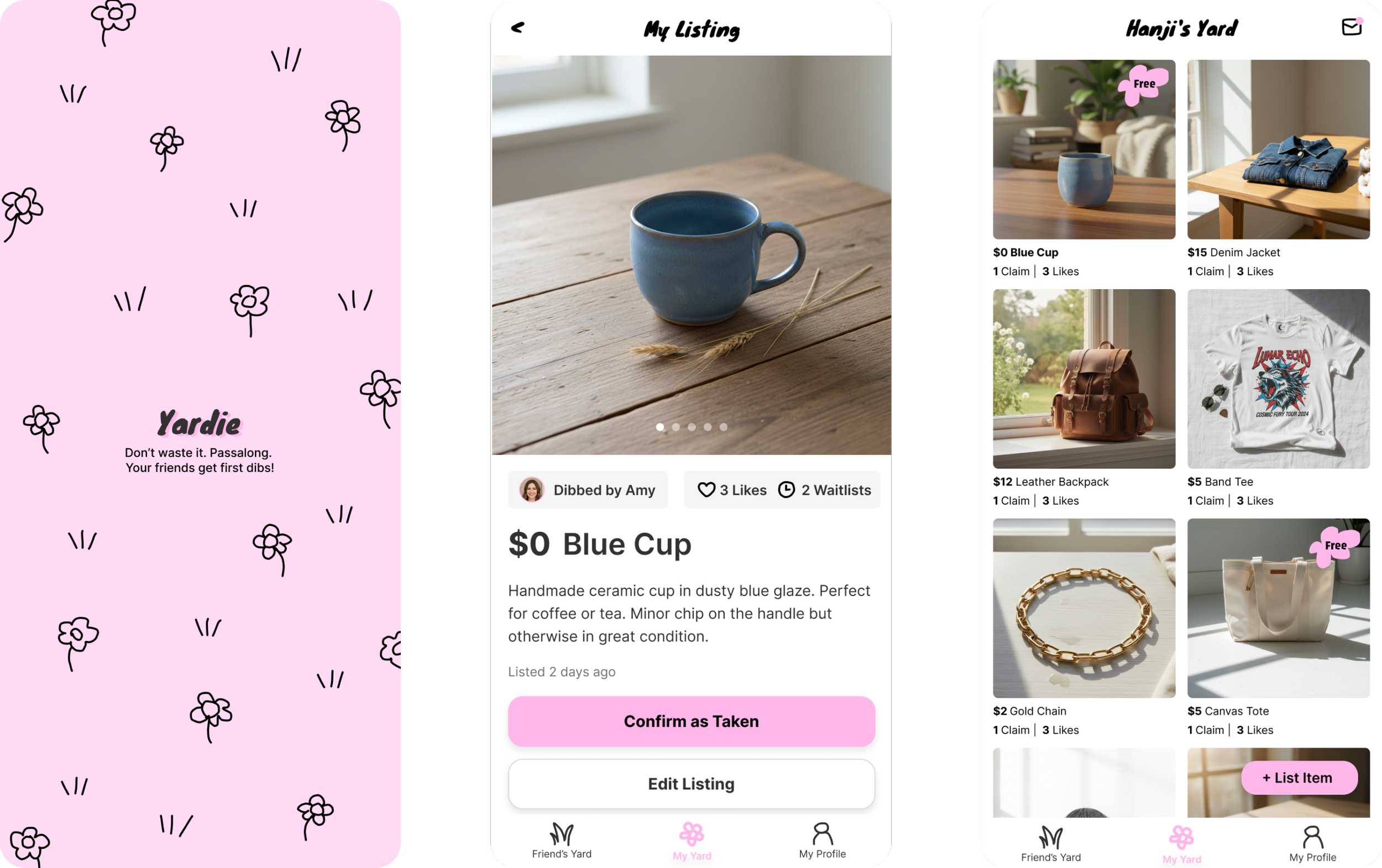
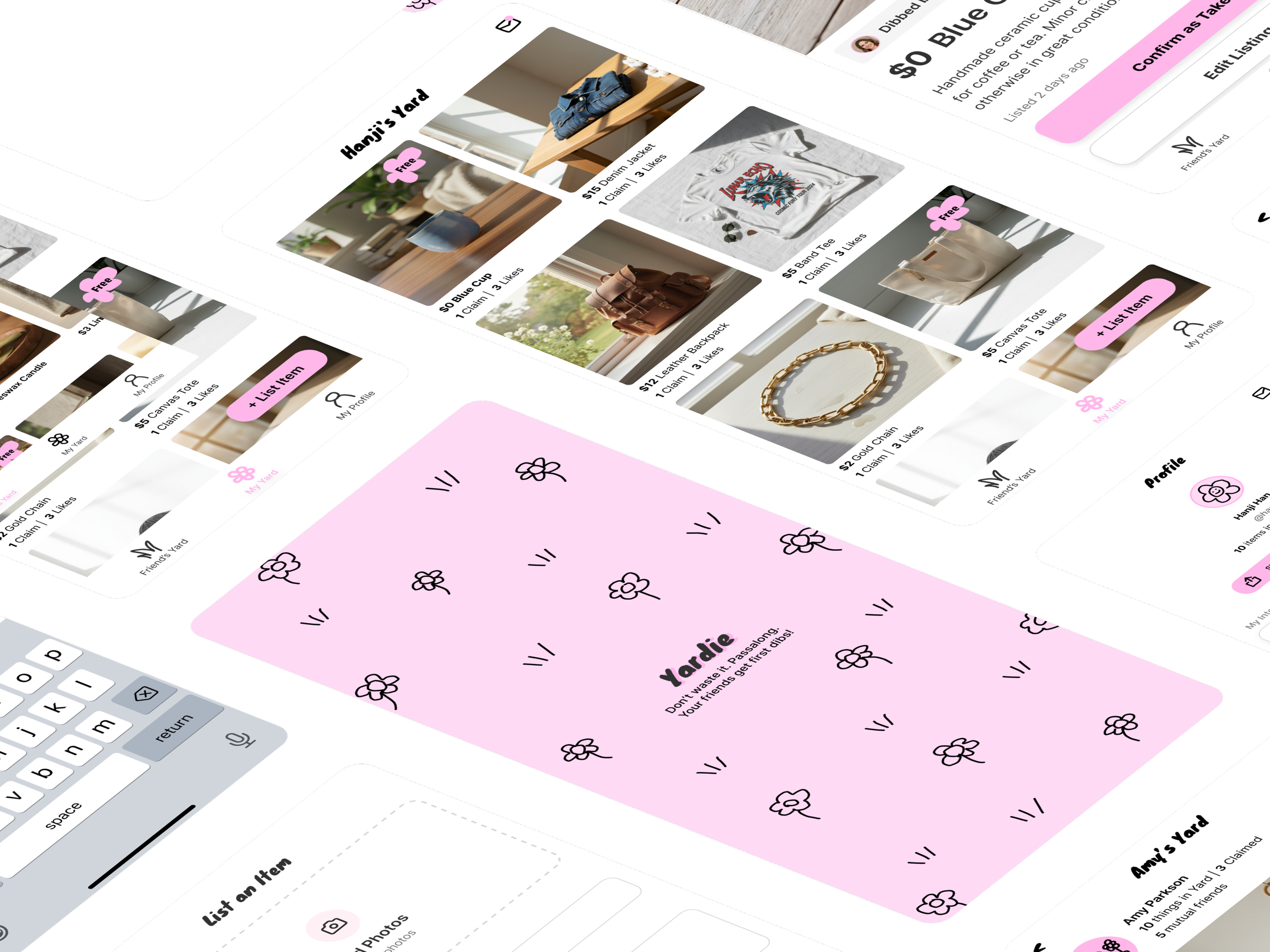
Your "Yard." Each person has a personal space of items they're offering, browsable by their friends.
List in seconds. Photo upload (auto-resized and compressed). Title and description auto-populated using AI. AI analyzes the photo to fill the title and descriptions automatically.
A fair way to call dibs. The first interested friend can Dib an item; anyone after can be waitlisted and gets notified if the first person backs out. This is to solve the exact "who actually gets it" problem the group chat couldn't.
Design Direction
1. Designing trust by inverting the marketplace model.
Most commerce apps start public and add safety features. Yardie starts private. Removing the public feed entirely wasn't a missing feature — it was the core product decision. Everything else follows from a closed, known circle.
2. "Dib" and "Waitlist" instead of generic like/buy.
Standard marketplace language (favorite, add to cart, buy now) carries stranger-commerce baggage. Claim and Watch model the actual social dynamic of friends passing things along — calling dibs, getting in line, and stepping aside gracefully — with notifications that keep it fair without requiring anyone to police the group chat.
3. A warm, hand-drawn visual language — deliberately not "shop-like."
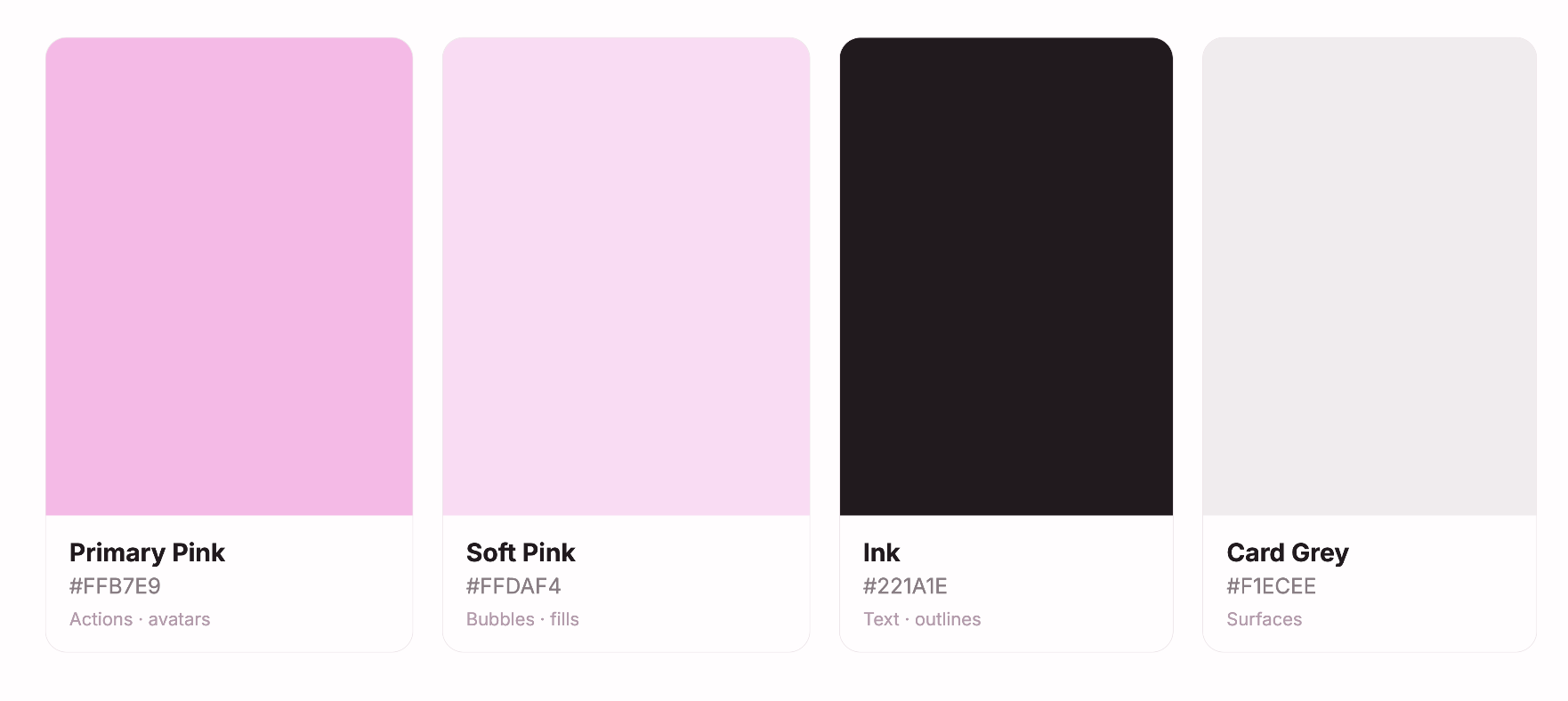
The aesthetic leans into dusty rose and mauve with soft, hand-drawn touches and item cards that read more like paper tags than product listings. This was a conscious rejection of the cold, conversion-optimized feel of commerce apps. The target tone is "sharing clothes with your best friend," not "checkout flow" — warm and personal without tipping into childish.
4. Ruthless v1 scope.
The temptation in marketplace products is to add ratings, payments, shipping, and search. I held the first version to the core loop — list → discover → claim — so the product stays light and the social mechanic stays the star.
5. Distribution as an extension of the product.
Rather than ship through an app store, Yardie is released as an installable web app (PWA) that friends open from a link and add to their home screen — no download, no TestFlight, no account hurdle. This removes the single biggest barrier for the exact audience the product is for: people who'd never install a dedicated app just to give away a sweater. The distribution model became part of the design — as low-friction and intimate as the
Design System
COLOR
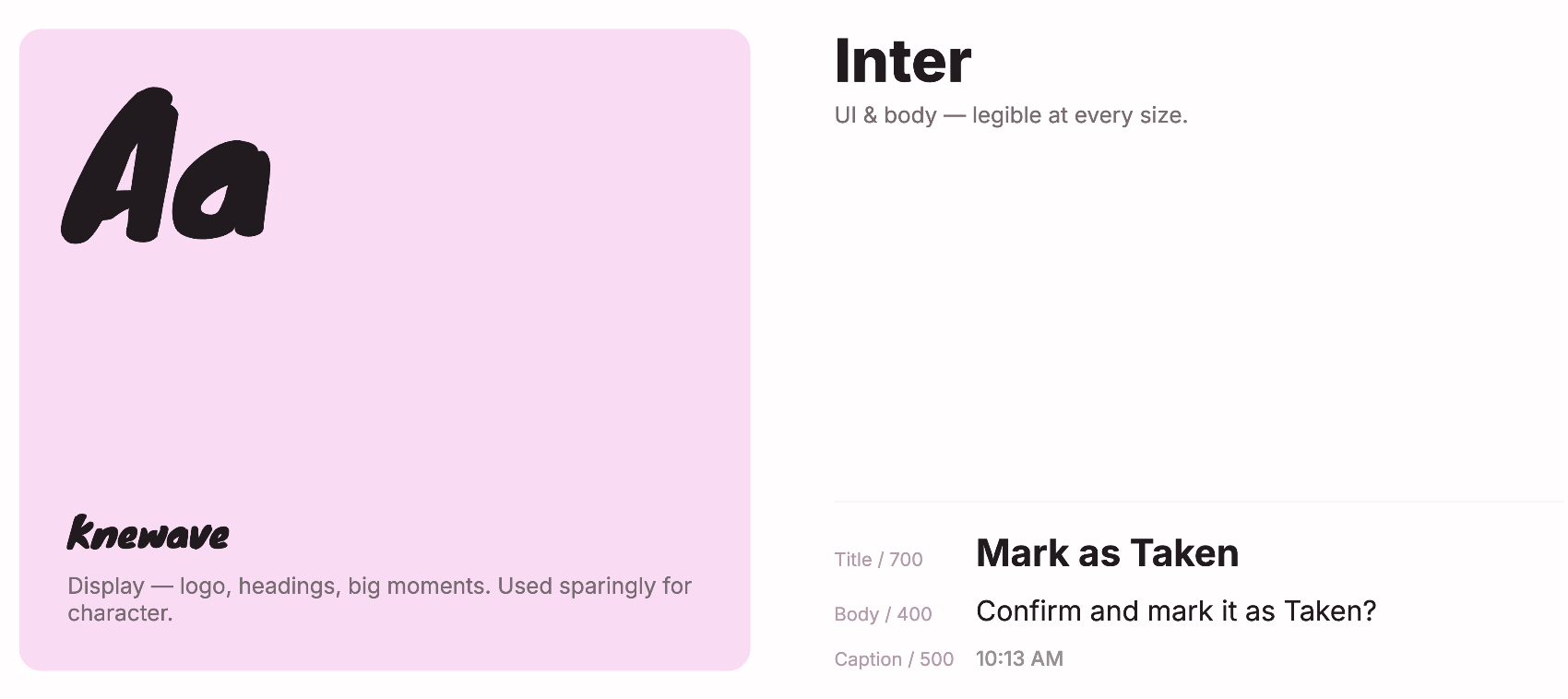
FONT
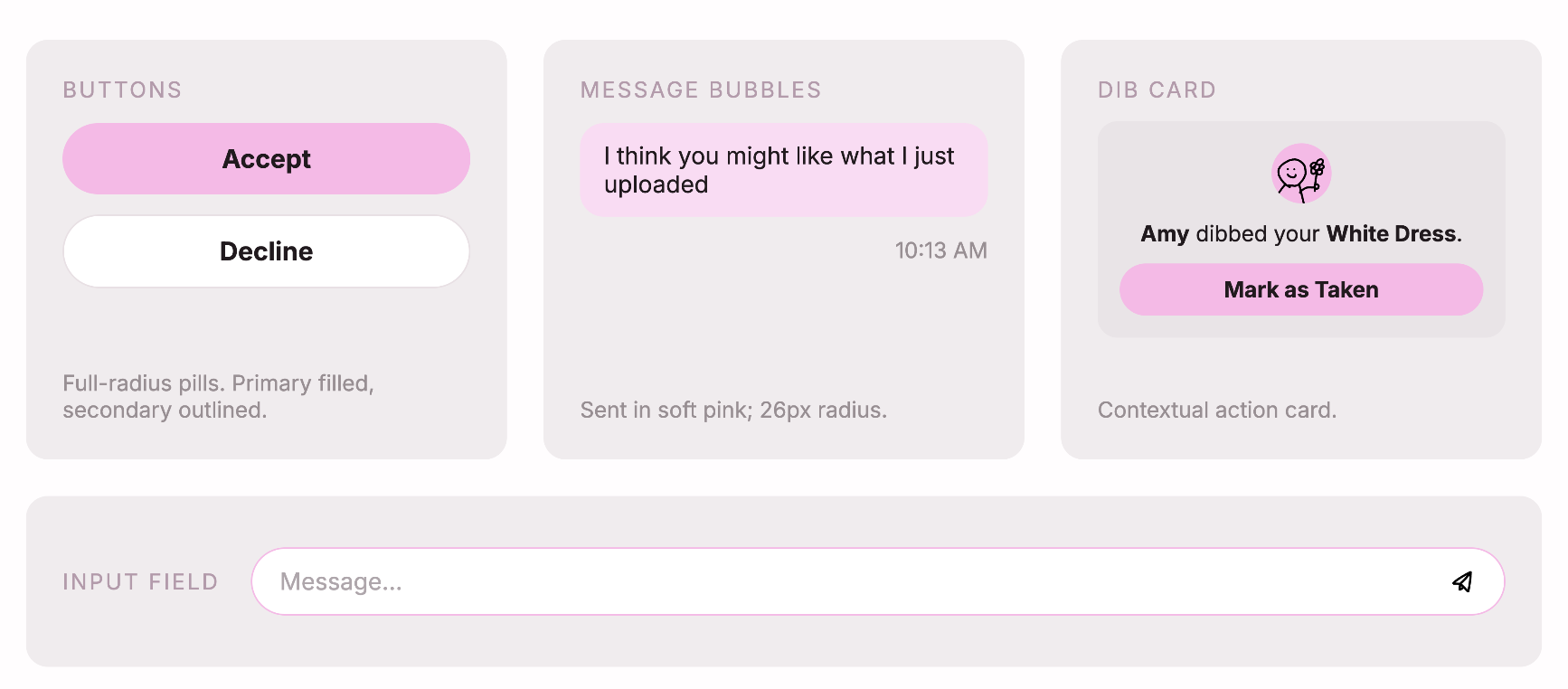
UI ELEMENTS
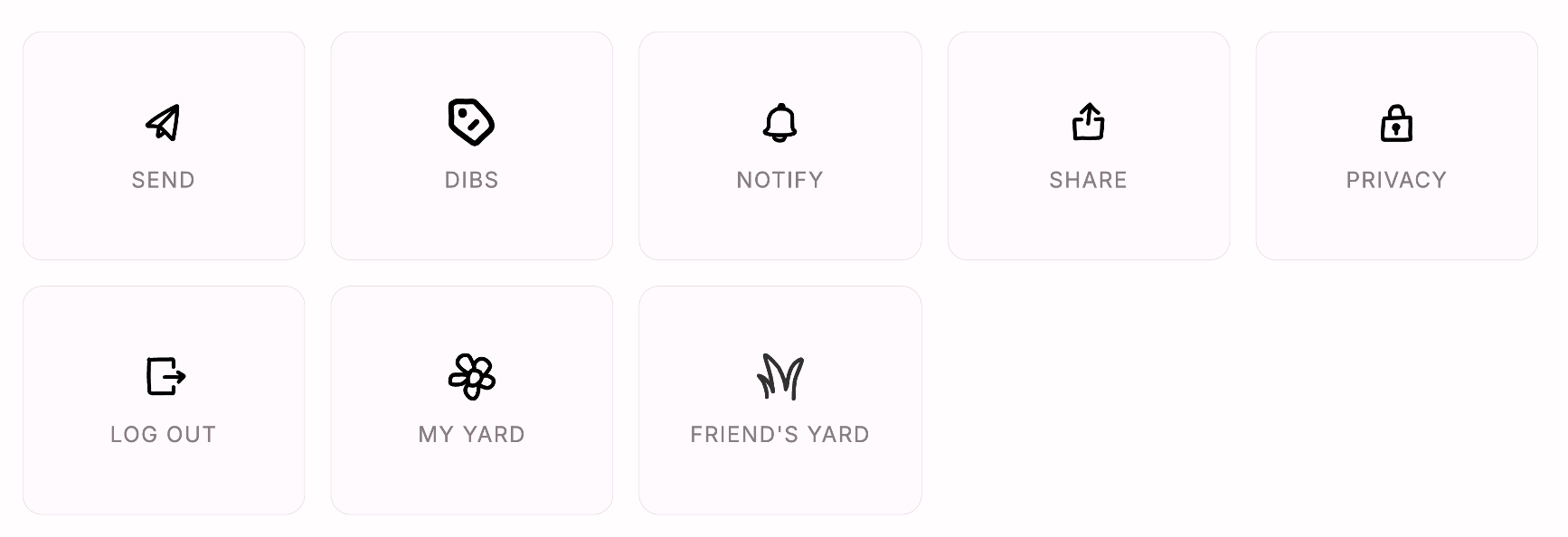
BUTTONS